Never run out of sight-reading again.
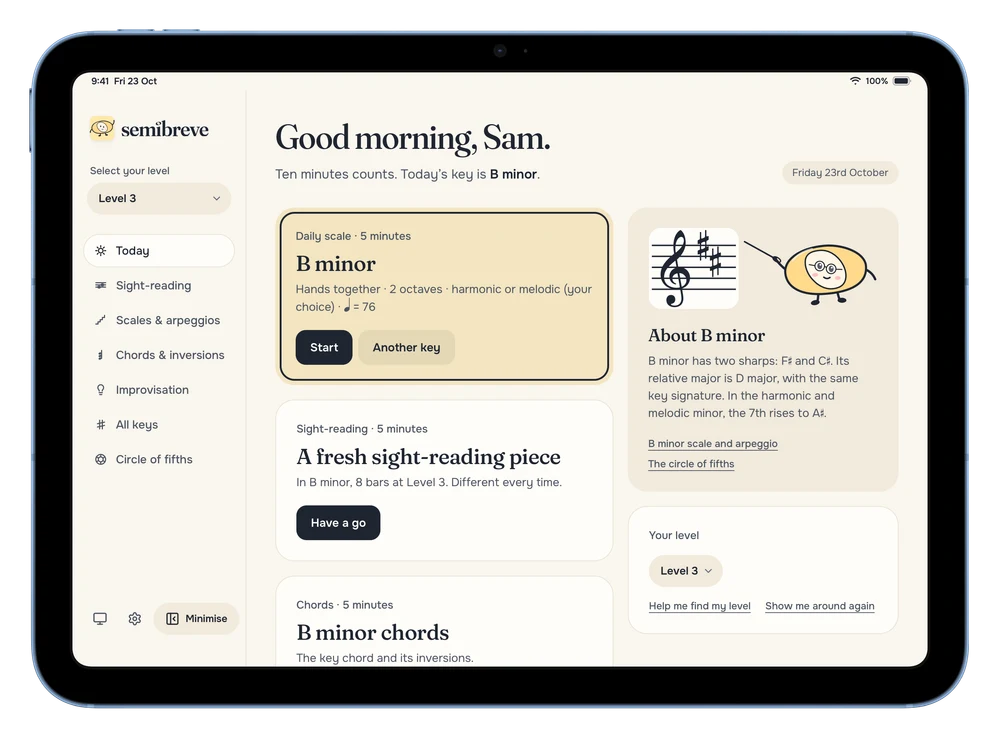
Semibreve writes a fresh piece at your level whenever you sit down to play. It has every scale and arpeggio with the fingering, and chords and improvising for when you want them.


First week free, then £4.99 a month or £34.99 a year. For iPhone, iPad and iPhone Duo.Your first week is free: no payment, and nothing to cancel. After that it’s £4.99 a month or £34.99 a year. For iPhone, iPad and iPhone Duo.
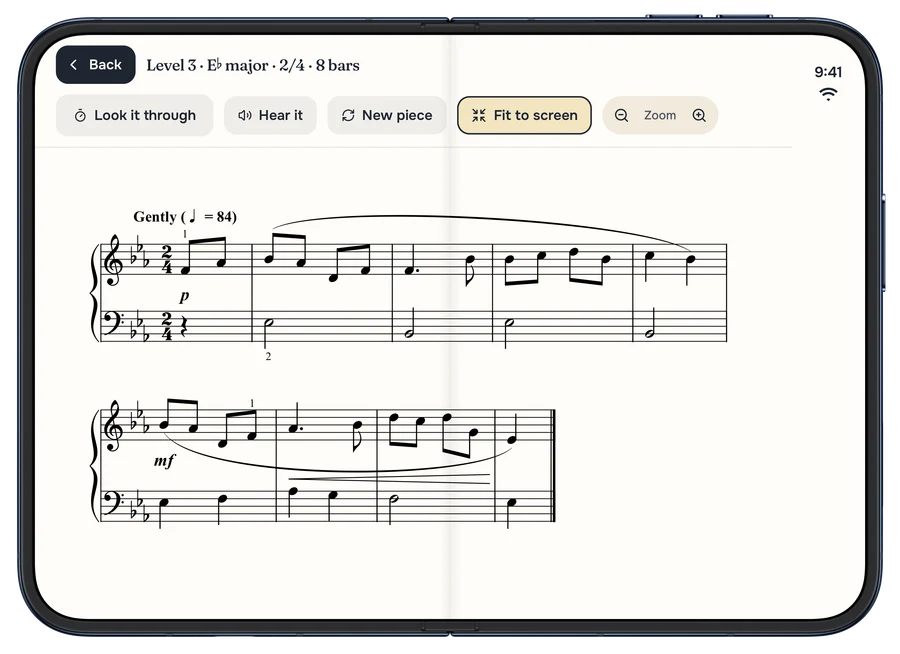
Read something new every day
Each piece is written for your level, in the keys and time signatures you’re learning, so you can’t learn it by heart. Give yourself 30 seconds to look through it, as you would in an exam, then play.
Level 3 · E flat major · 2/4 · 8 bars
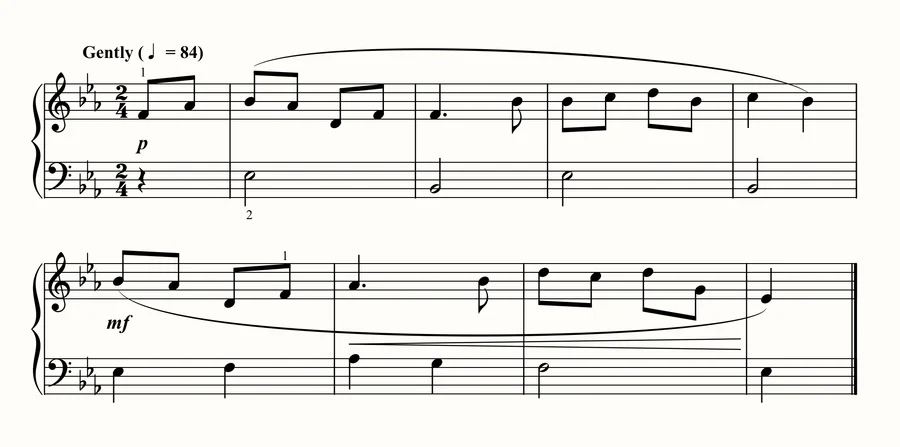
When you’ve played it, tell Breve how it felt, and Breve will suggest a level up or down to match.

Every scale and arpeggio, with the fingering
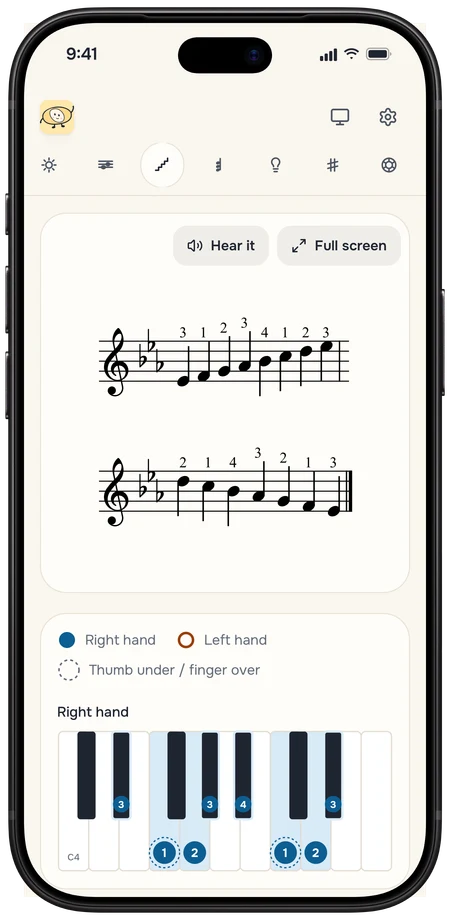
All 24 major and minor keys, plus chromatic and whole-tone scales. The fingering is printed on the music and shown on the keys, and Hear it plays it so you know how it should sound.
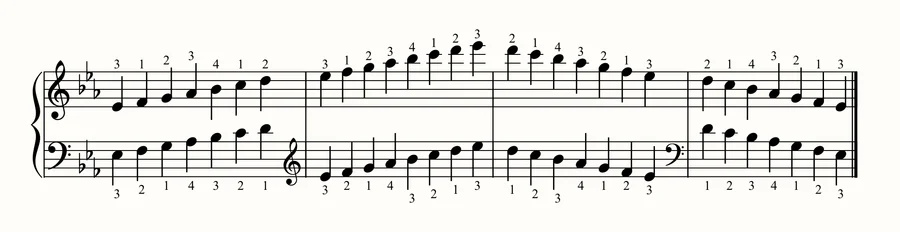
The fingering on the keys
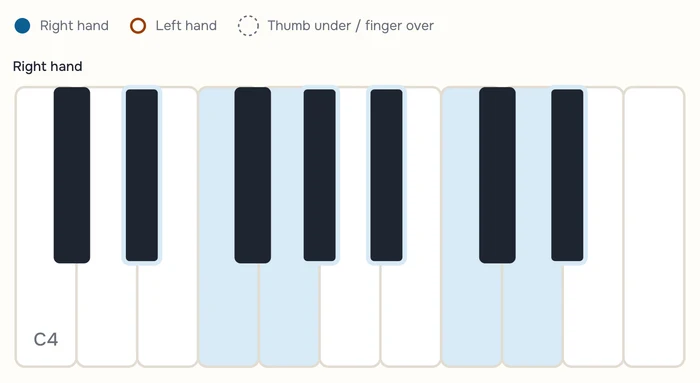
Each note is numbered on the keyboard too, with a ring where your thumb tucks under or a finger crosses over.
A tip before you start
Breve points out where your thumb tucks under and where a finger crosses over.
Breve’s tip
- Right hand: thumb tucks under onto F and C.
- Left hand: finger 4 crosses over onto A flat, then finger 3 crosses over onto E flat.
- Play it slowly a couple of times before you speed up.
Chords, and making up your own
Learn the triads and their inversions in every key, then put them to use: improvise over real chord progressions and make up music of your own.
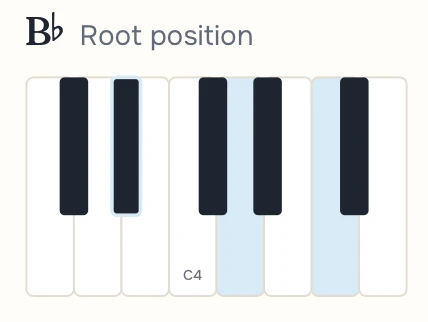
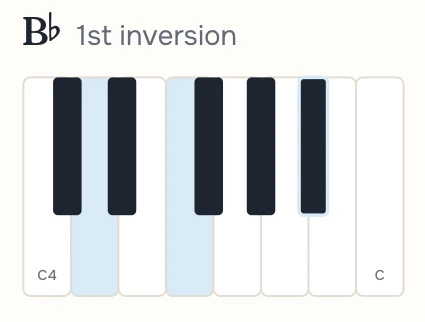
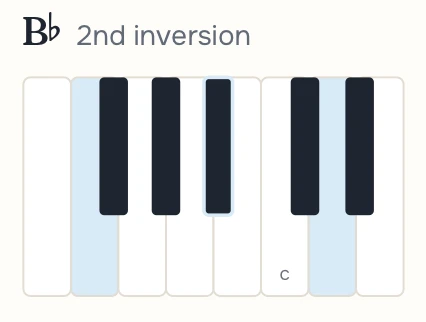
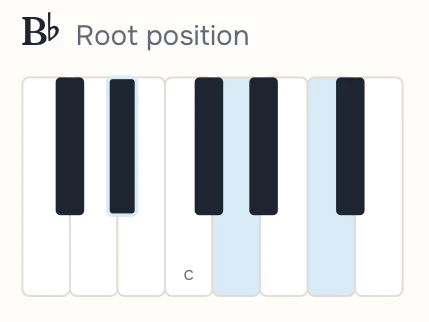
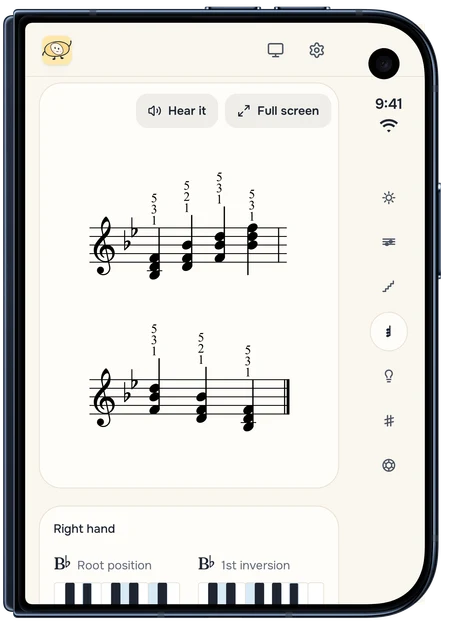
Every triad, in every inversion
Root position, 1st and 2nd inversion, each on its own keyboard with the fingering.
Right hand
Then make up your own
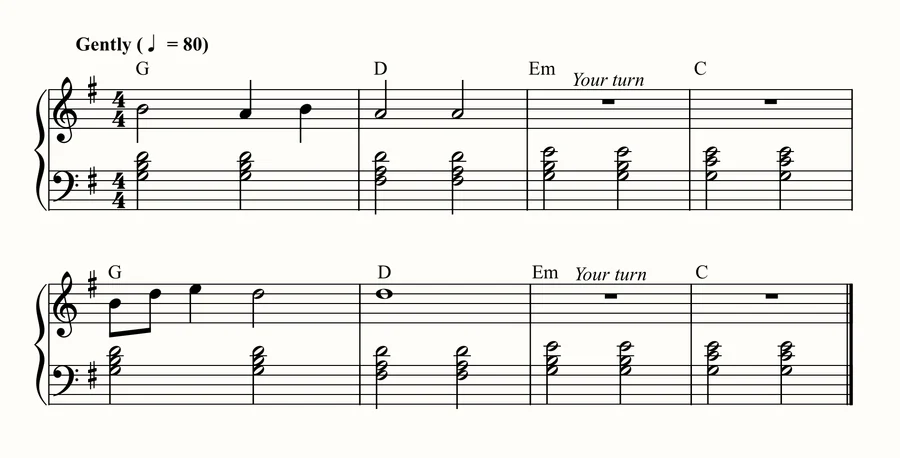
Semibreve gives you a two-bar question, and you answer it.
- 1. Play the question: two bars over real chords.
- 2. Make up the answer in the bars marked “Your turn”.
- 3. Loop the backing chords while you try out ideas.
Starter to Level 8
Each level is about the standard of the UK exam grade with the same number. Sight-reading often lags behind scales, so in Semibreve your reading can have a level of its own.
It’s made for exam students, adult learners, players coming back to the piano, and parents helping at home.
Semibreve’s levels are its own. It isn’t affiliated with any exam board.
Breve keeps you company
Breve is a semibreve, the longest note there is, and lives beside the music with a tip or a word of encouragement. There are no streaks to keep up, and Breve won’t tell you off for missing a day.
Right hand: thumb tucks under onto F and C. Play it slowly a couple of times before you speed up.
Lovely reading. Fancy one from Level 4?
Have a look first. Spot any tricky bars before you start.
On iPhone, iPad and iPhone Duo
There’s no account, no adverts and no tracking. Everything you save stays on your device, and it all works without the internet.
Why I made Semibreve
I’m an adult piano learner, and my sight-reading is about two grades behind my scales. The advice is simple: read something new every day, at the right level. Finding enough of it was the hard part, and I also wanted to be able to choose the key, to match the scale I was practising.
So I made the practice companion I wanted, with endless pieces at my level and every scale with its fingering. I hope it helps you too.
Jay
Your first week is free
There’s no payment to start and nothing to cancel. After the week, Semibreve locks until you choose a plan.
First week free
Then
£34.99a year
About £2.92 a month, 41% less than paying monthly.
Or £4.99 a month, and cancel any time.
Prices are for the UK and include VAT. The App Store shows yours in your own currency. Plans renew until you cancel, which you can do any time in your Apple Account settings.
Questions
All questionsIs the first week really free?
Yes. You don’t pay anything or choose a plan to start, so there’s nothing to cancel. You get everything in Semibreve for 7 days.
What happens after the free week?
Semibreve locks until you choose a plan: £4.99 a month, or £34.99 a year (about £2.92 a month). It won’t charge you unless you choose one. Plans renew until you cancel, which you can do any time in your Apple Account settings.
Does it follow ABRSM or Trinity?
Semibreve has its own levels, Starter and then 1 to 8. Each is about the standard of the UK exam grade with the same number, so it works alongside exam practice, but it isn’t affiliated with any exam board. Check your own syllabus for exactly what your exam asks for.
Do I need a digital piano?
No. Semibreve doesn’t listen to you play, so any piano or keyboard works. Prop your iPad or iPhone on the music stand and play from the screen.
Which devices does it work on?
iPhone, iPad and iPhone Duo. It works without the internet, and you don’t need an account.